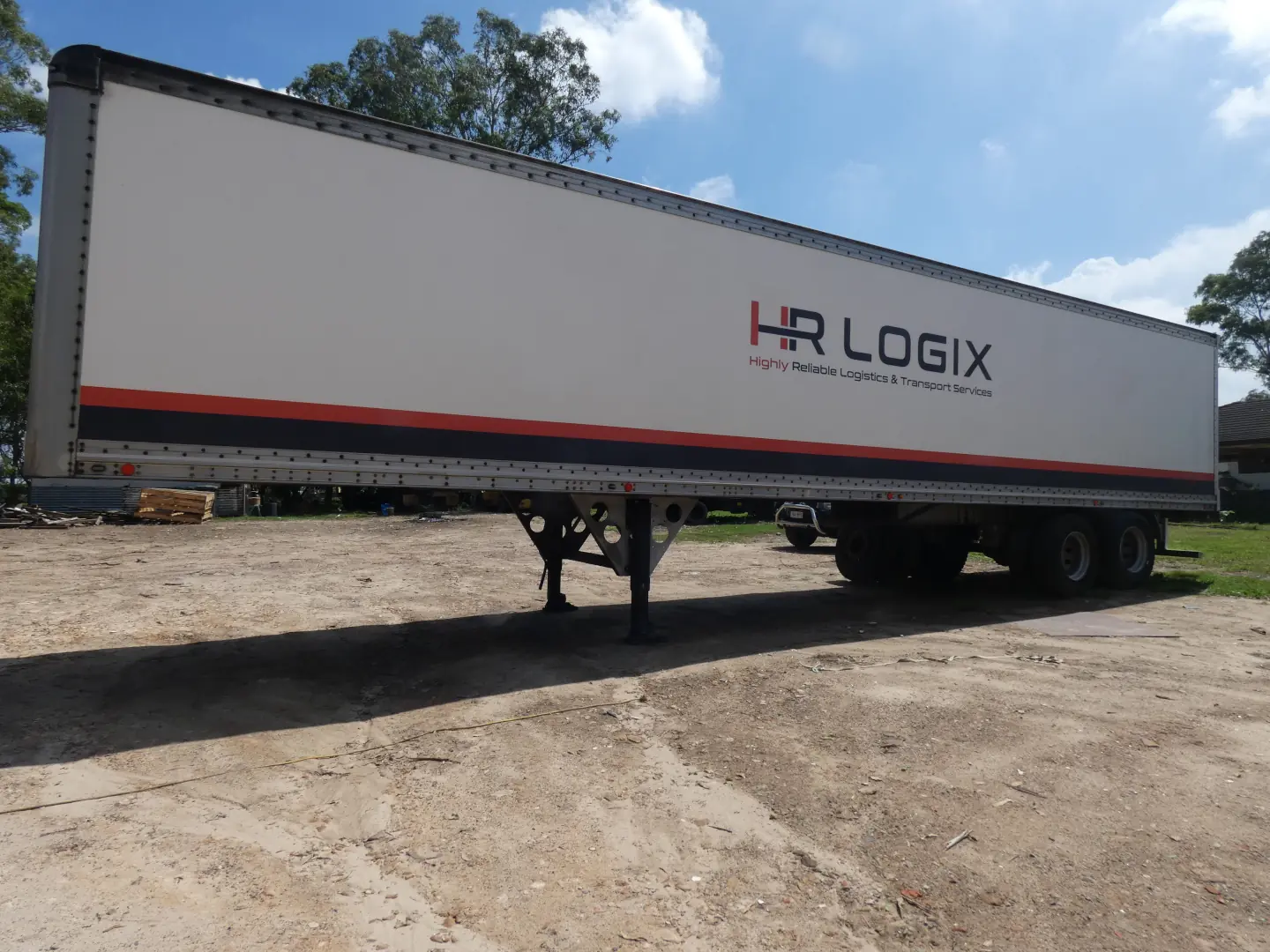
Trailer Maintenance Guide: Everything You Need to Know to Stay Safe and Compliant
A trailer is only as reliable as the maintenance behind it. For transport operators and owner-operators across Australia, trailers represent a significant investment — and a significant responsibility. Whether you’re running a single dog trailer or a fleet of B-doubles, keeping your trailers properly maintained is essential for road safety, legal compliance, and protecting your bottom line.
Yet trailer maintenance is one of the most commonly neglected areas in heavy vehicle operations. Unlike the prime mover, trailers don’t have an engine demanding attention — so issues can quietly develop unnoticed until they become dangerous or costly.
This guide covers everything you need to know about trailer maintenance — from daily pre-trip checks to full periodic inspections — helping you stay safe, compliant, and operational.
Why Trailer Maintenance Is Non-Negotiable
Under Australia’s Heavy Vehicle National Law (HVNL), every party in the chain of responsibility — including operators, owners, and drivers — has a legal duty to ensure trailers are roadworthy and properly maintained at all times.
Failing to maintain your trailer can result in:
- Defect notices and vehicles being taken off the road immediately
- Heavy fines for operating an unroadworthy vehicle
- Licence suspension or loss of operator accreditation
- Serious accidents caused by brake failures, tyre blowouts, or coupling failures
- Cargo loss or damage due to structural or restraint system failures
- Insurance complications if an incident occurs on an unmaintained trailer
The consequences of neglect extend well beyond the workshop bill. A single trailer failure can put lives at risk, end careers, and devastate businesses.
Types of Trailers and Their Unique Maintenance Needs
Different trailer configurations have specific maintenance requirements. Understanding your trailer type is the first step to maintaining it correctly.
Flat Bed & Drop Deck Trailers
Exposed to the elements and subject to heavy load stress. Focus areas include structural integrity, tie-down points, and deck condition.
Refrigerated Trailers
In addition to standard trailer maintenance, refrigerated units require regular servicing of the refrigeration unit, door seals, and temperature monitoring systems.
Tipper Trailers
Hydraulic systems, tipping mechanisms, and body integrity require regular inspection and lubrication alongside standard trailer maintenance.
Dog & Tag Trailers
Multiple axle groups and coupling systems require careful attention to axle alignment, brake balance, and turntable or drawbar condition.
Curtainsider Trailers
Curtain tracks, straps, buckles, and side rails require regular inspection to ensure load security and structural integrity.
The Complete Trailer Maintenance Checklist
1. Brakes & Brake System
The braking system is the single most critical safety component on any trailer.
- Brake lining and pad thickness — check for wear beyond minimum limits
- Brake drum and disc condition — look for scoring, cracking, or heat damage
- Air brake chamber and diaphragm condition
- Slack adjuster operation — manual and automatic
- Air lines and fittings — check for leaks, cracking, or chafing
- Park brake operation and holding capacity
- ABS system function and warning light check
2. Tyres & Wheels
- Tyre tread depth — minimum 1.5mm across the full width of the tread
- Tyre pressure — check cold, refer to manufacturer specifications
- Tyre condition — cuts, bulges, uneven wear, sidewall damage
- Wheel nut torque — critical after any wheel removal
- Rim condition — check for cracks, damage, or corrosion
- Spare tyre condition and pressure where applicable
3. Coupling & Connection Systems
- Fifth wheel condition and lubrication — check for wear, play, and locking mechanism function
- Kingpin condition — check for wear and correct dimensions
- Drawbar condition — cracks, bends, or corrosion
- Safety chains — condition, attachment points, and correct length
- Airline couplings — glad hands condition and sealing
- Electrical connectors — pins, sockets, and cable condition
4. Suspension System
- Leaf spring condition — cracks, broken leaves, U-bolt torque
- Air bag suspension — condition, leaks, and ride height
- Shock absorber condition and mounting
- Axle alignment — check for tracking and tyre wear patterns
- Torque rod and bush condition
- Turntable bearing condition and lubrication (B-doubles and road trains)
5. Lights & Electrical
- Marker lights — all present, functioning, and correct colour
- Brake lights and indicators — test full system operation
- Reverse lights where fitted
- Wiring harness — check for chafing, damage, or exposed wiring
- Electrical connector pins — corrosion and secure connection
- Reflectors — present, clean, and undamaged
6. Structural Integrity
- Chassis rails — cracks, corrosion, or impact damage
- Cross members — condition and secure attachment
- Body panels and flooring — structural soundness
- Tie-down rails and anchor points — load rating integrity
- Mudguards and mud flaps — condition and secure mounting
- Underrun protection — front and rear guards condition
7. Load Restraint Systems
- Tie-down straps and chains — condition, rating, and quantity
- Ratchet mechanisms — operation and condition
- Load binders — condition and locking function
- Curtain and strap systems — structural integrity
Daily Pre-Trip Trailer Inspection
Every driver should complete a pre-trip inspection before coupling and departing. This should take no more than 15 minutes and can prevent breakdowns and compliance issues on the road.
Quick pre-trip checklist:
- ✅ Visual walk-around — look for obvious damage, leaks, or flat tyres
- ✅ Coupling check — confirm fifth wheel is locked and kingpin is secure
- ✅ Airline and electrical connections — secure and undamaged
- ✅ All lights operational — brake lights, indicators, markers
- ✅ Tyre condition — no obvious flats, bulges, or damage
- ✅ Load restraints — cargo secure and restraints within rating
- ✅ Safety chains — attached and correct length
- ✅ Brake test — perform brake application test before departure
Documenting your pre-trip inspection is strongly recommended and may be legally required depending on your accreditation scheme.
Scheduled Trailer Service Intervals
| Service Type | Recommended Interval |
|---|---|
| Pre-trip inspection | Before every journey |
| Brake adjustment & inspection | Every 20,000 km or 3 months |
| Minor service — oils, lubrication | Every 25,000 km or 6 months |
| Full trailer service | Every 50,000 km or 12 months |
| Wheel bearing repack | Every 50,000 km |
| Full roadworthy inspection | Annually or as required |
| Refrigeration unit service | Every 6 months (refrigerated trailers) |
These are general guidelines. Always refer to your trailer manufacturer’s service manual and consult a qualified heavy vehicle mechanic for a schedule tailored to your specific trailer type and operations.
Common Trailer Problems and What Causes Them
Understanding common failure points helps operators catch issues early before they escalate.
Brake fade or reduced braking performance Usually caused by worn brake linings, glazed drums, or air system leaks. Never ignore changes in braking performance — this is a serious safety issue requiring immediate attention.
Tyre blowouts Most commonly caused by under-inflation, overloading, or running tyres beyond their service life. Regular pressure checks and tyre inspections are the best prevention.
Coupling failures Often the result of worn fifth wheel components, inadequate lubrication, or failure to properly engage the locking mechanism. Coupling inspections should be part of every pre-trip check.
Electrical faults Wiring damage from road debris, moisture ingress into connectors, and corroded pins are the most common causes of trailer lighting and ABS failures.
Suspension wear Broken leaf springs and worn air bags are common in heavily loaded trailers operating on rough roads. Uneven tyre wear is often the first indicator of a suspension issue.
Structural fatigue Repeated heavy loading causes metal fatigue in chassis rails and cross members over time. Cracks must be identified and repaired promptly by a qualified welder and mechanic.
Trailer Maintenance Records — Why They Matter
Keeping accurate and up-to-date maintenance records is not just best practice — it is a legal requirement under the HVNL for many operators.
Good maintenance records:
- Demonstrate compliance in the event of a roadside inspection or incident investigation
- Support insurance claims by proving the vehicle was properly maintained
- Help track recurring issues so patterns can be identified and addressed
- Add resale value to your trailer by providing a documented service history
- Protect you legally under chain of responsibility provisions
Your maintenance records should include the date of each service, work performed, parts replaced, technician details, and the next scheduled service date.
On-Site vs. Workshop Trailer Repairs — Which Is Better?
For many trailer repairs and maintenance tasks, on-site servicing is the most practical and cost-effective option. Mobile heavy vehicle mechanics can perform brake inspections, lubrication, electrical repairs, and many other tasks at your depot or job site — eliminating the time and cost of towing.
However, some repairs — such as structural welding, wheel bearing repacks, and major brake overhauls — are best performed in a fully equipped workshop where the trailer can be properly supported and inspected.
A good heavy vehicle mechanic will advise you on the most appropriate approach for each job, balancing safety, cost, and convenience.
How Maharaj’s Mechanical Services Keeps Your Trailers Running
At Maharaj’s Mechanical Services & Transport PTY LTD, trailer maintenance and repairs are a core part of what we do. Since 2022, we have been helping transport operators and owner-operators across New South Wales keep their trailers safe, compliant, and operational.
Our trailer services include:
- Full trailer servicing and inspections — all trailer types and configurations
- Brake system repairs and adjustments — drums, discs, air systems, and ABS
- Coupling and fifth wheel servicing — inspection, lubrication, and replacement
- Suspension repairs — leaf springs, air bags, and axle alignment
- Electrical and lighting repairs — wiring, connectors, and full system diagnostics
- On-site trailer repairs — we come to your depot or location
- 24/7 emergency breakdown assistance — roadside trailer repairs any time
We service all trailer makes, models, and configurations — from single axle dog trailers to multi-combination B-doubles and road trains.
Final Thoughts
Trailer maintenance is a responsibility that no transport operator can afford to overlook. A well-maintained trailer protects your drivers, your cargo, other road users, and your business. A neglected trailer is a liability — on the road, in the eyes of the law, and on your balance sheet.
By following a structured maintenance schedule, conducting thorough pre-trip inspections, and partnering with a qualified heavy vehicle mechanic, you can keep your trailers on the road, out of trouble, and working hard for your business — day after day, kilometre after kilometre.
Need a trailer service or repair? Contact Maharaj’s Mechanical Services & Transport today. Our team is available 24/7 for all trailer maintenance, repairs, and emergency breakdown assistance across New South Wales.
- Phone: 0432 813 916
- Email: maharajsmechanical@gmail.com
- Address: 217 Grange Ave, Marsden Park, NSW 2765